Compound to finished part in our own plant; recipe, process and quality under one roof.
◉ Technical rubber · 49 years
Engineering rubber from the molecule up.
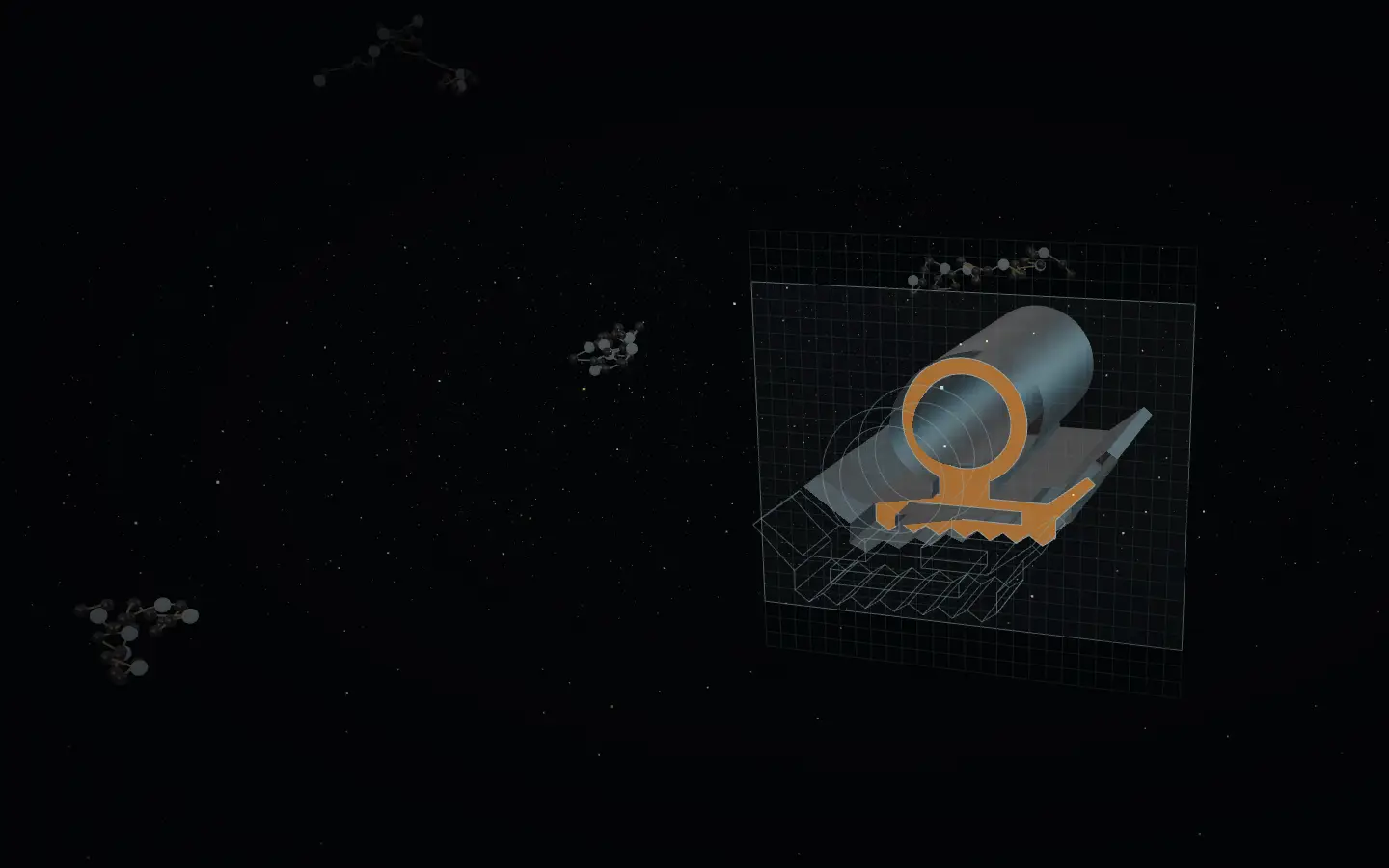
Technical rubber compounds, EPDM membranes and sheets, flame-retardant profiles and rubber-to-metal parts. Rotate the representative profile, cut it, look inside.
ISO 9001ISO 14001ISO 45001EN 45545-2 HL3
About · 1977
Since 1977 we have been designing rubber in the laboratory in Bursa and producing it in our own plant, from compound to finished part. Every profile is a recipe; every recipe is measured, documented and rewritten for your project.
1977Since
Nearly 50 yearsExperience
100%In-house production
16Laboratory test methods
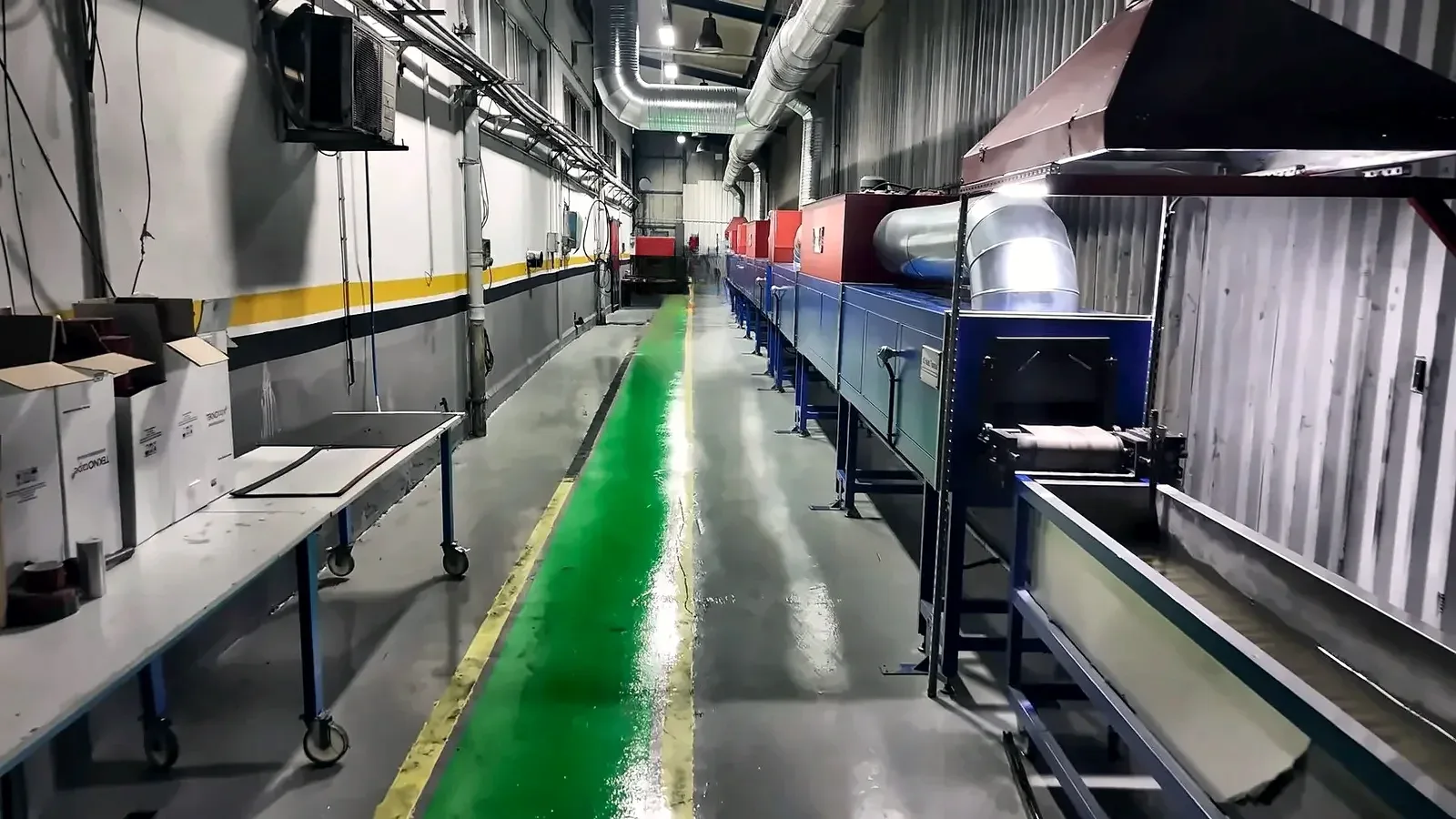
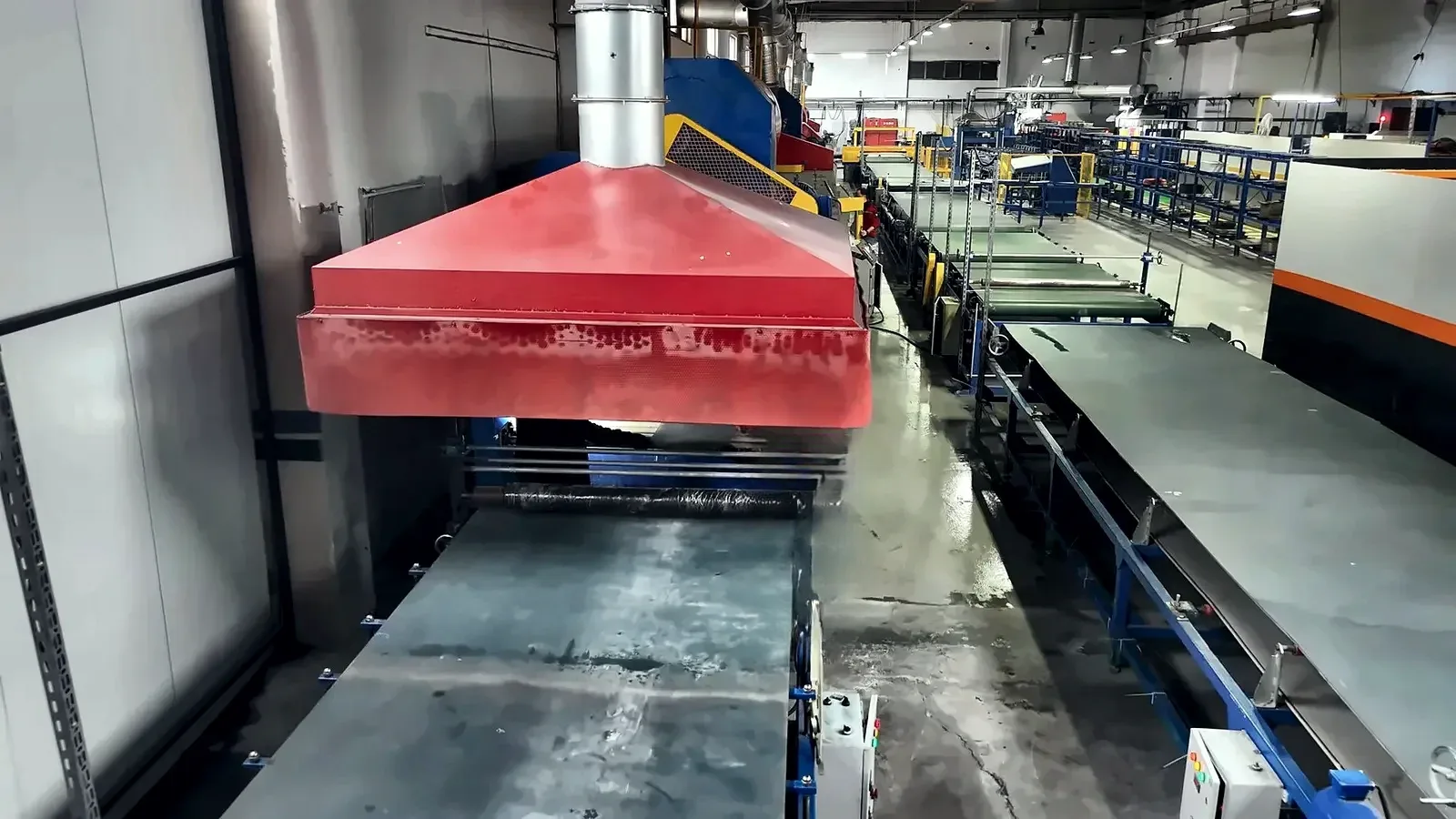
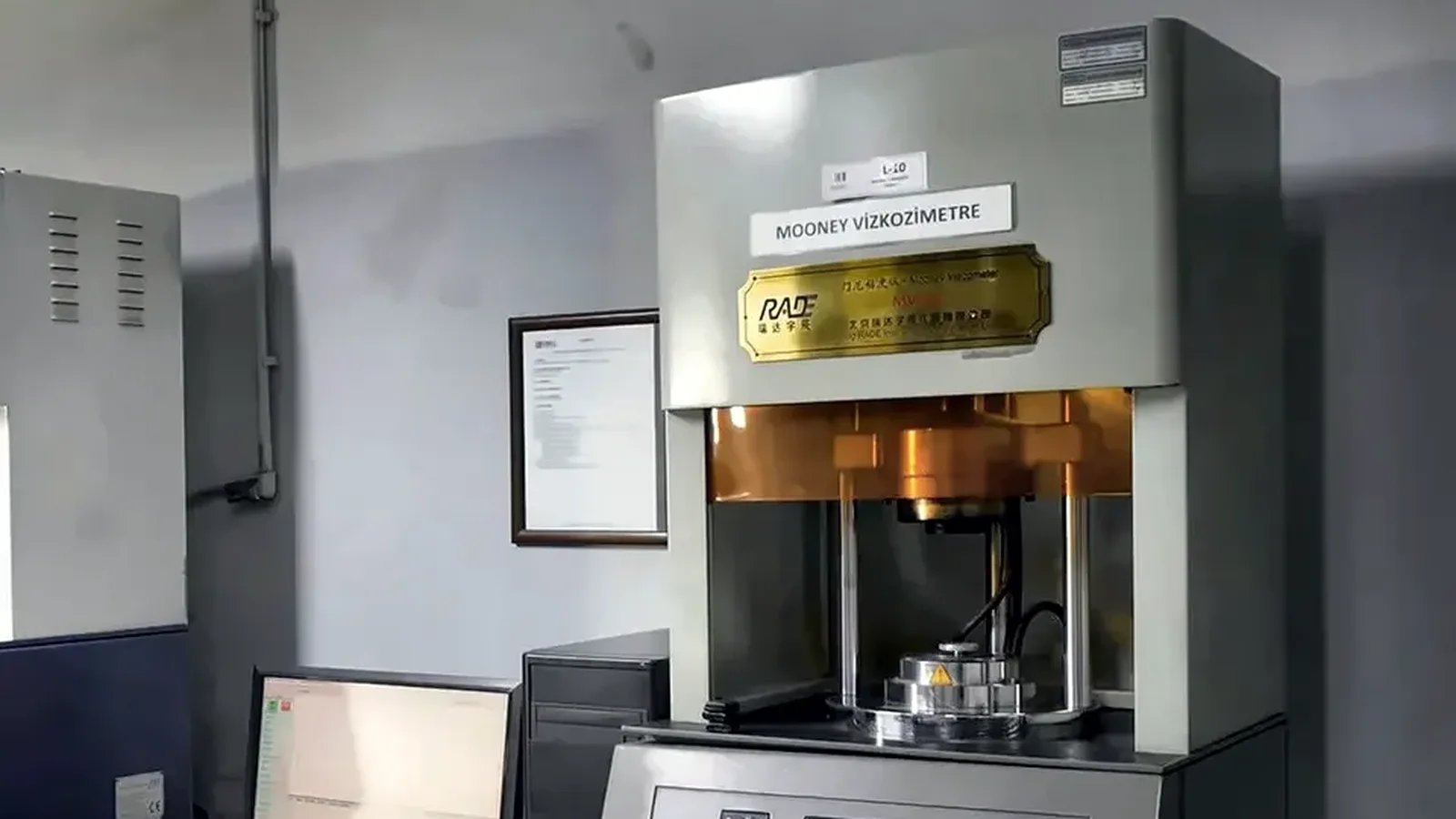
◉ Production
- 01 Recipe
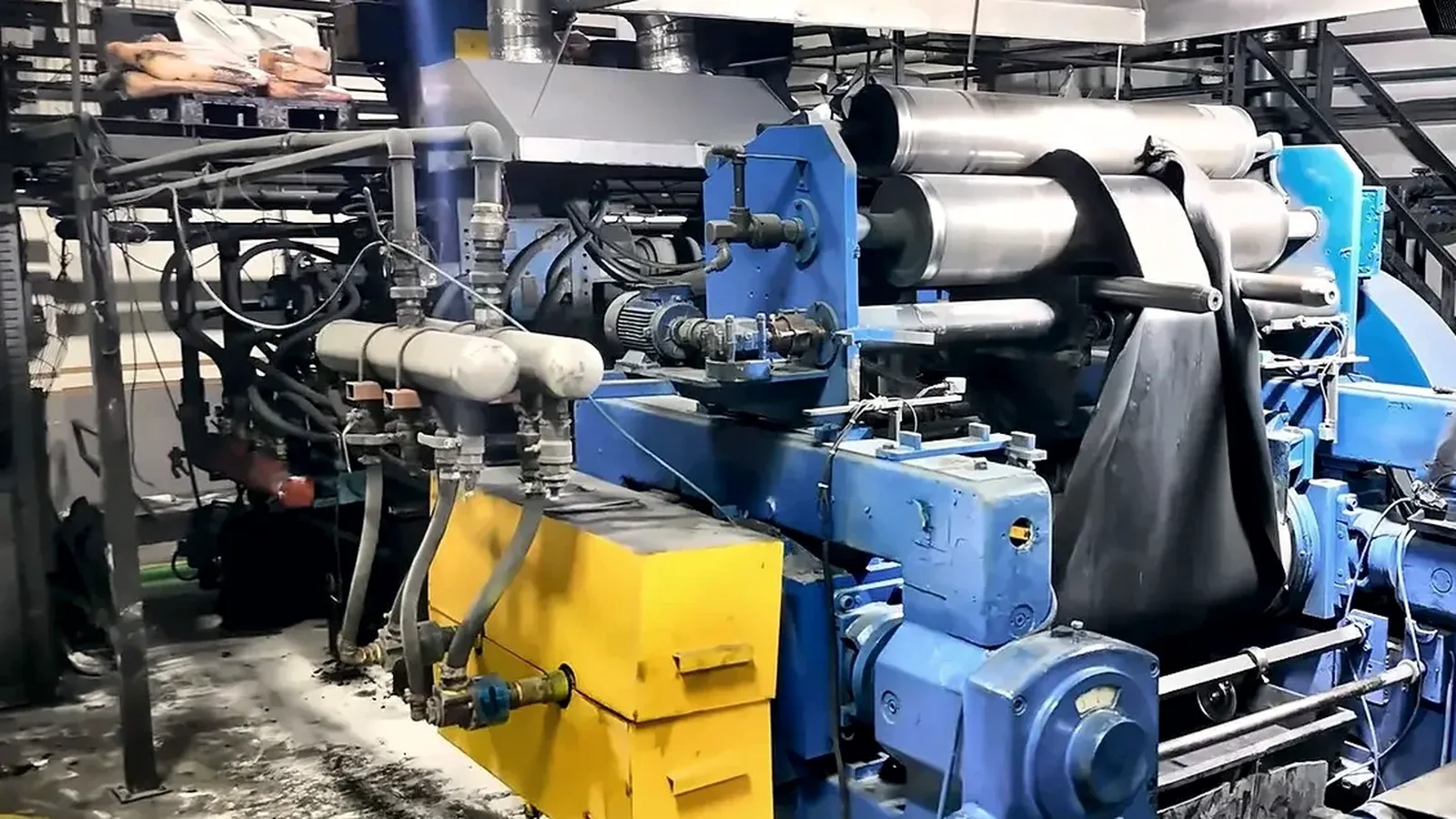
- 02 Compound & Mill
- 03 Extrusion
- 04 Vulcanisation
- 05 Calender & Press
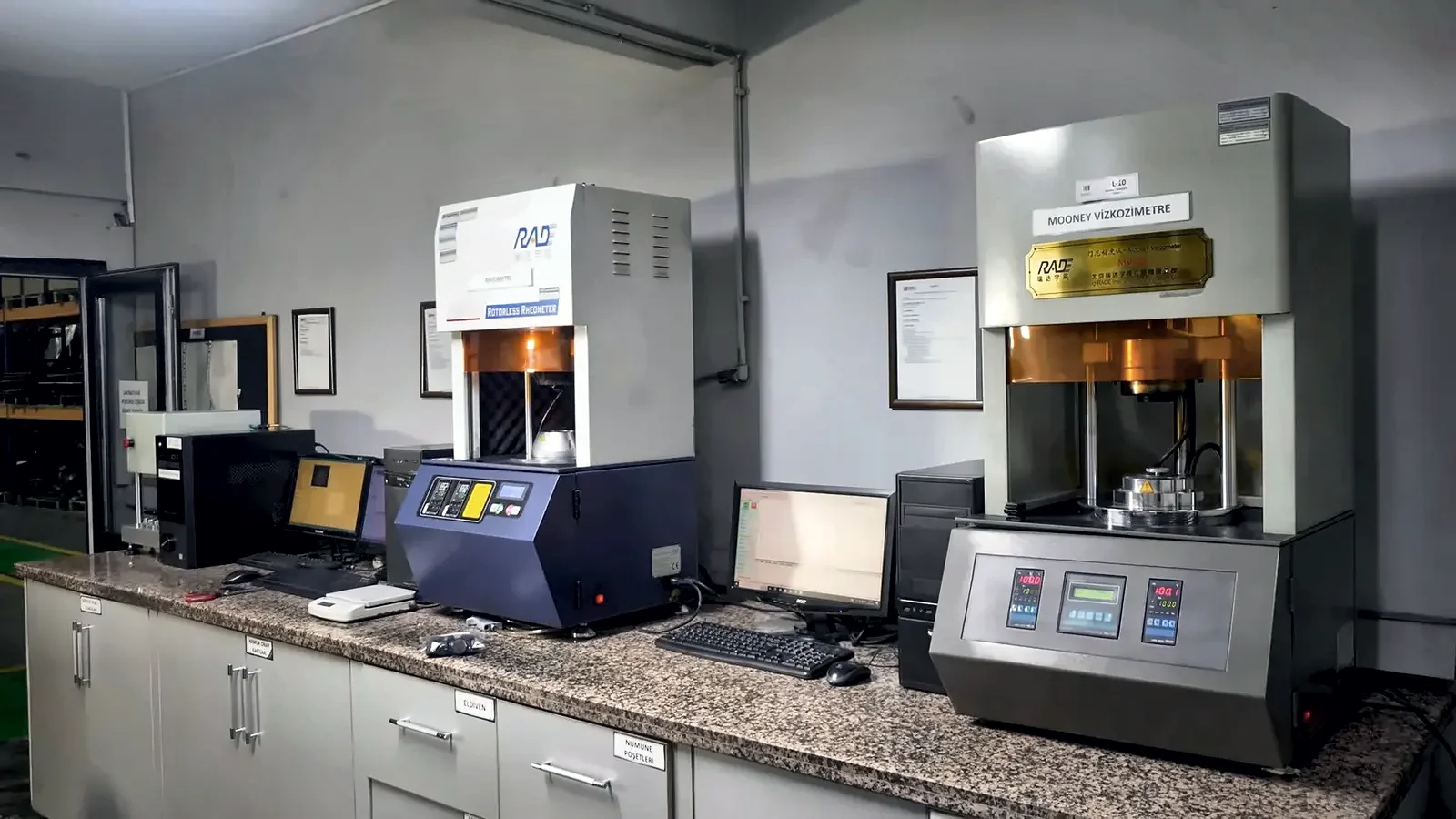
- 06 Laboratory
01
Recipe
Every project starts with a formula in the laboratory.
02
Compound & Mill
Rubber, fillers and chemicals become a homogeneous compound.
03
Extrusion
The compound passes through the die; profiles and seals take shape.
04
Vulcanisation
In the tunnel oven the rubber gains permanent elasticity.
05
Calender & Press
Membranes, sheets and moulded parts.
06
Laboratory
16 test methods in our laboratory.
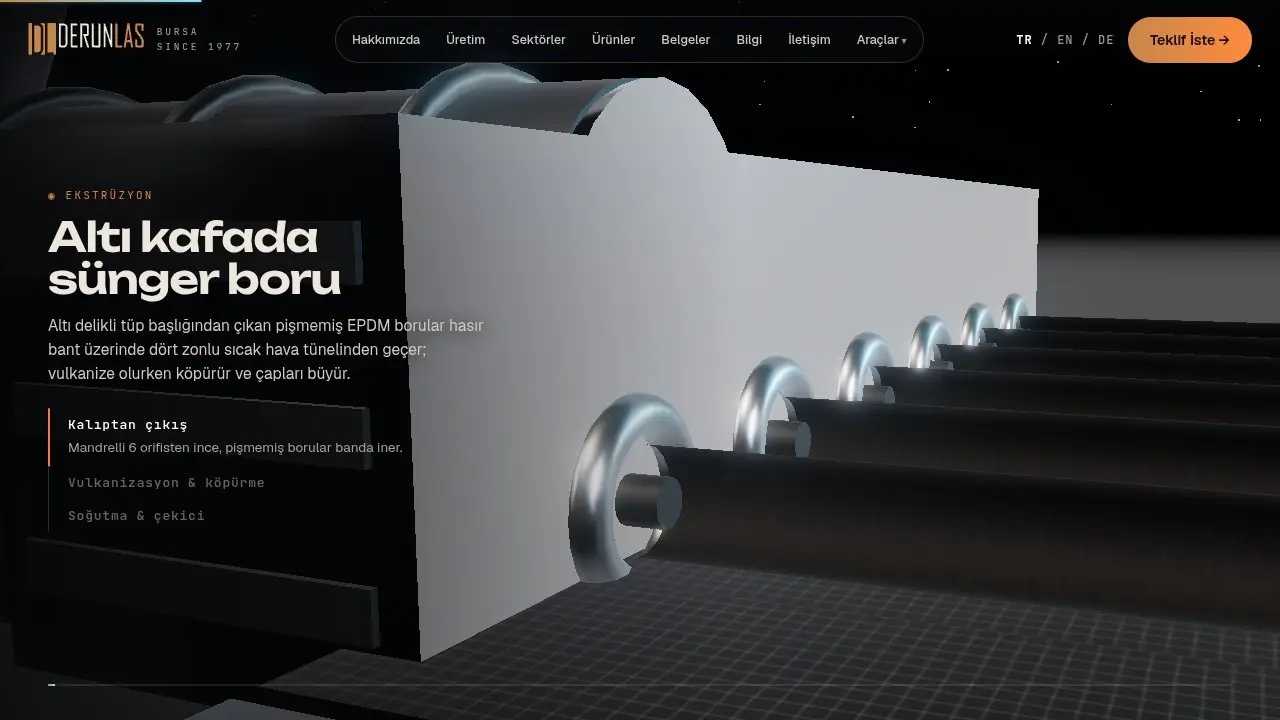
◉ Extrusion
Sponge tube production
Uncured EPDM tubes leave the tube head, ride metal roller conveyors through a four-zone hot-air tunnel, and foam and swell as they cure.
- Die exitThin uncured tubes leave the dies straight onto the roller conveyor.
- Cure & foamIR shock and four hot-air zones cure the tubes; diameter grows.
- Cooling & haul-offAfter cooling, haul-off pulls the tubes.
◉ Sectors
Rubber, sector by sector.
For each sector a short simulation shows the job rubber does. The scene advances as you scroll.
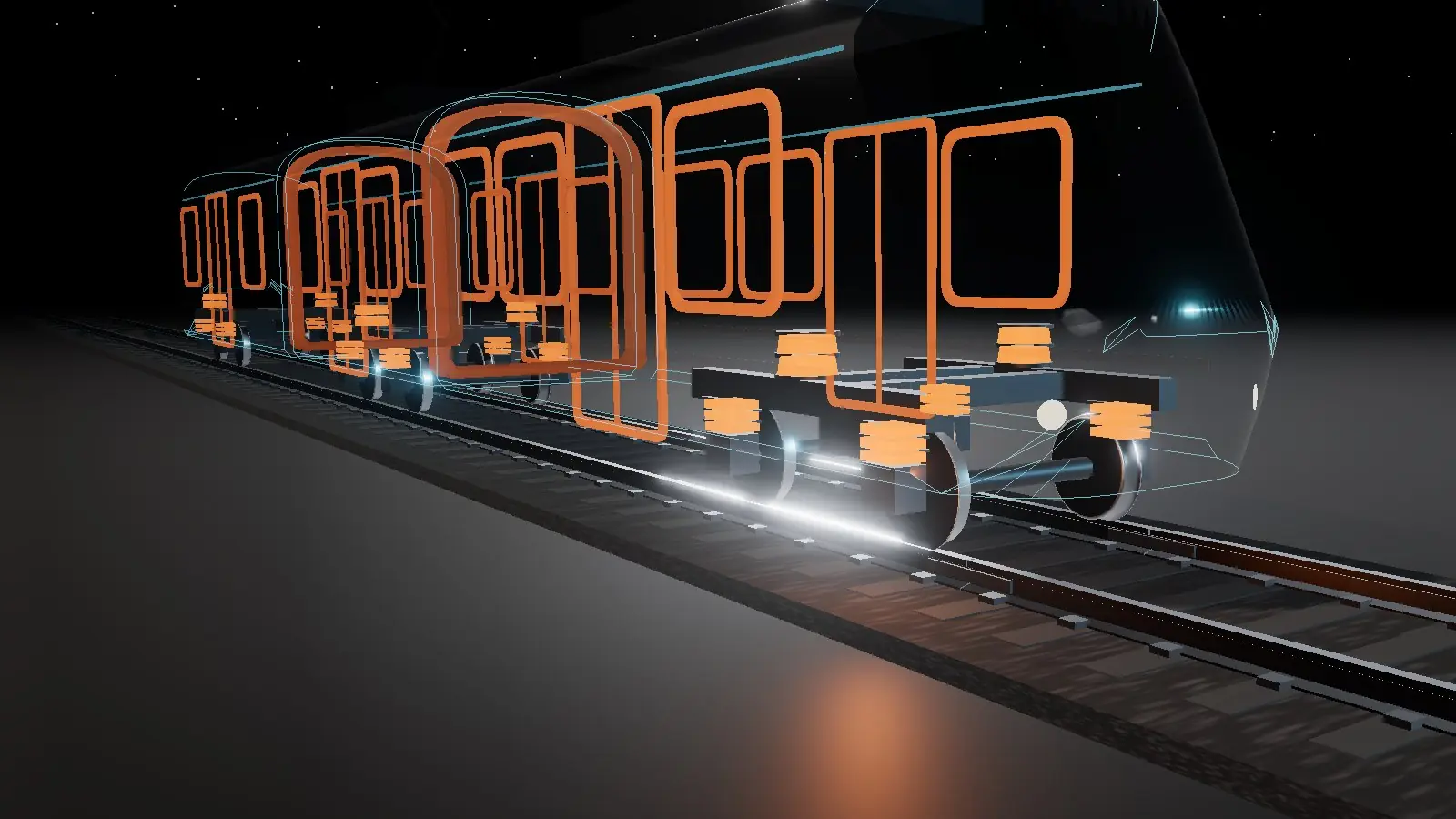
01 / 09 · Rail systems
Quiet rubber, on the rails.
In rail vehicles rubber parts are hidden but everywhere: rubber-to-metal elements damping vibration in the bogie, sealing profiles around doors and windows.
- Rubber partsIn X-ray view, rubber and rubber-to-metal parts are highlighted in copper.
- Vibration at the rail jointThe impact at a rail joint reaches the body attenuated by the rubber-to-metal element in the bogie.
- Door and window sealsSealing profiles keep water, dust and noise out.
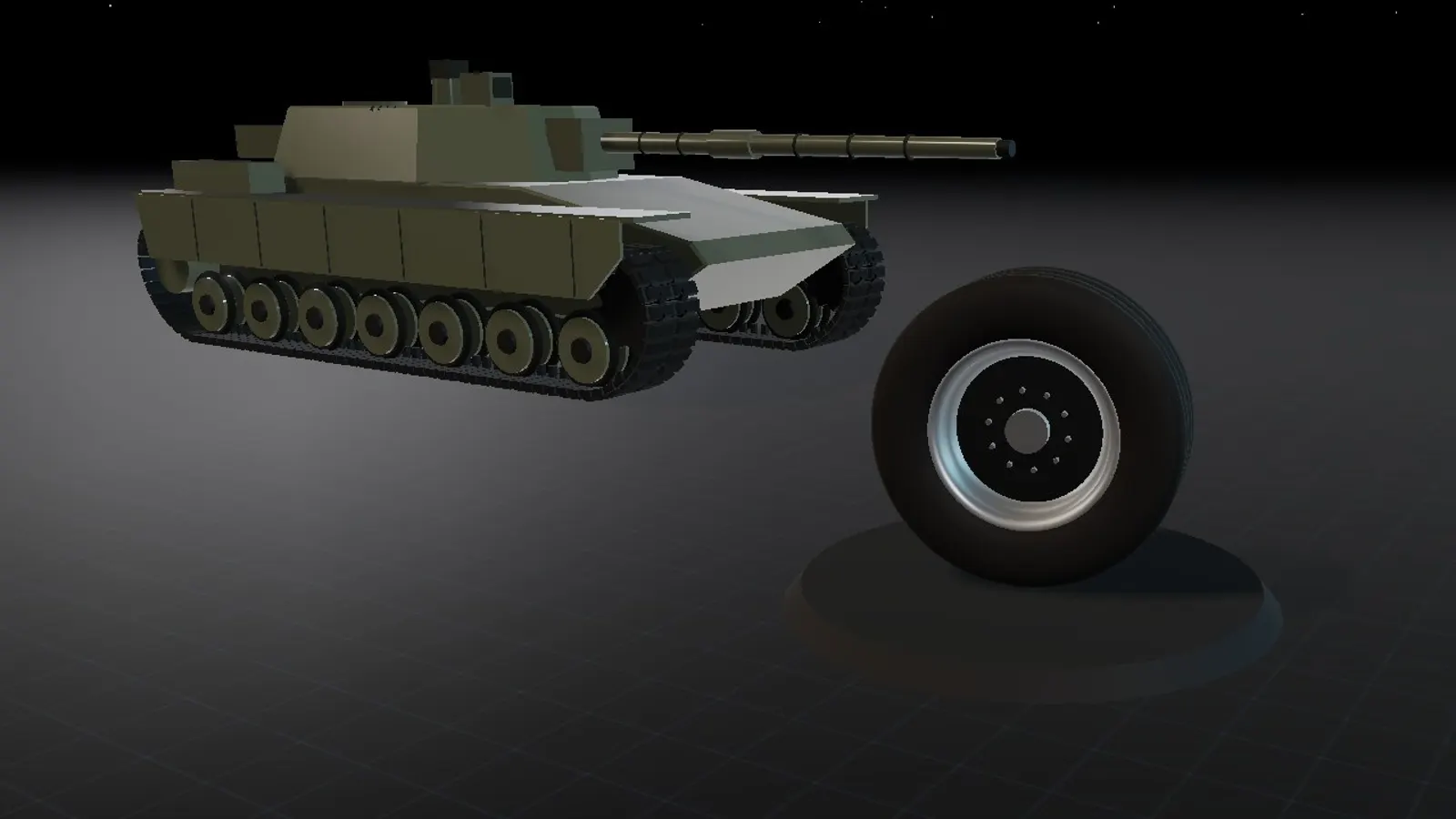
02 / 09 · Defence
Rubber under the track.
In tracked and wheeled defence vehicles rubber-to-metal parts work in the running gear; a beadlock clamp ring locks the tyre bead to the rim.
- Track padsRubber pads on the track links meet the ground.
- Running gearRubber-to-metal elements in rollers and suspension damp impacts.
- BeadlockThe beadlock ring on the rim flange clamps the tyre bead with bolts.

03 / 09 · Automotive
Rubber carries the vibration.
In driveshaft and engine mounts the rubber-to-metal element damps vibration of rotating parts before it reaches the body. Door and boot seals separate the cabin from the outside.
- Driveshaft mountA rubber-to-metal mount connects the shaft flexibly to the body.
- Vibration dampingShaft vibration is attenuated in the mount; far less reaches the body.
- SealsDoor seals seal against water and wind noise.
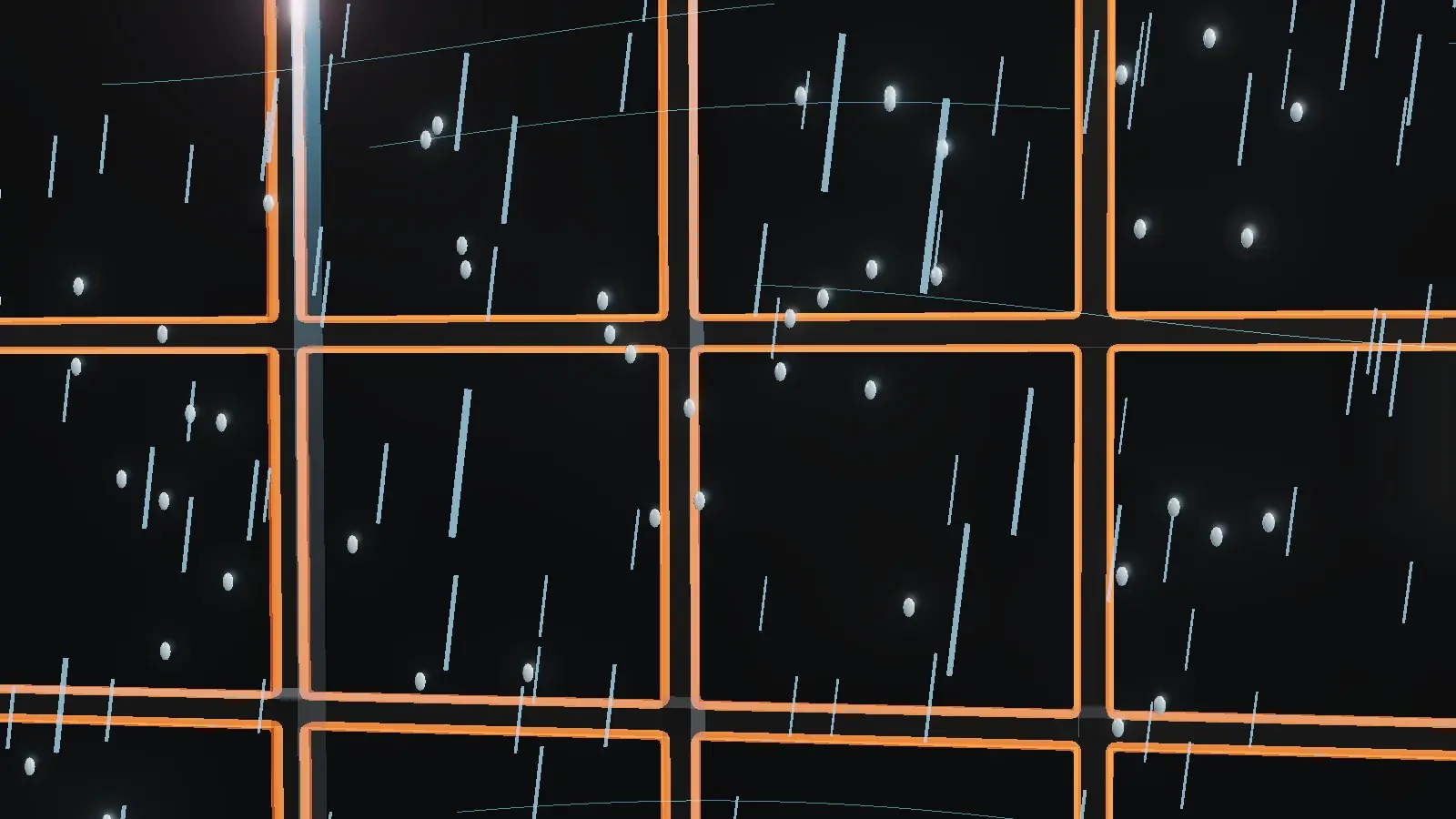
04 / 09 · Construction & façades
The rain stays outside.
In door, window and façade systems EPDM seals seat the glass and sash in the frame and keep rain and wind from getting through.
- FaçadeAt glass and panel joints the seals form a continuous sealing line.
- Rain and windThe seal line keeps rain and wind at the outer surface.
- Window sectionThe section shows the glazing seal and the sash seal.
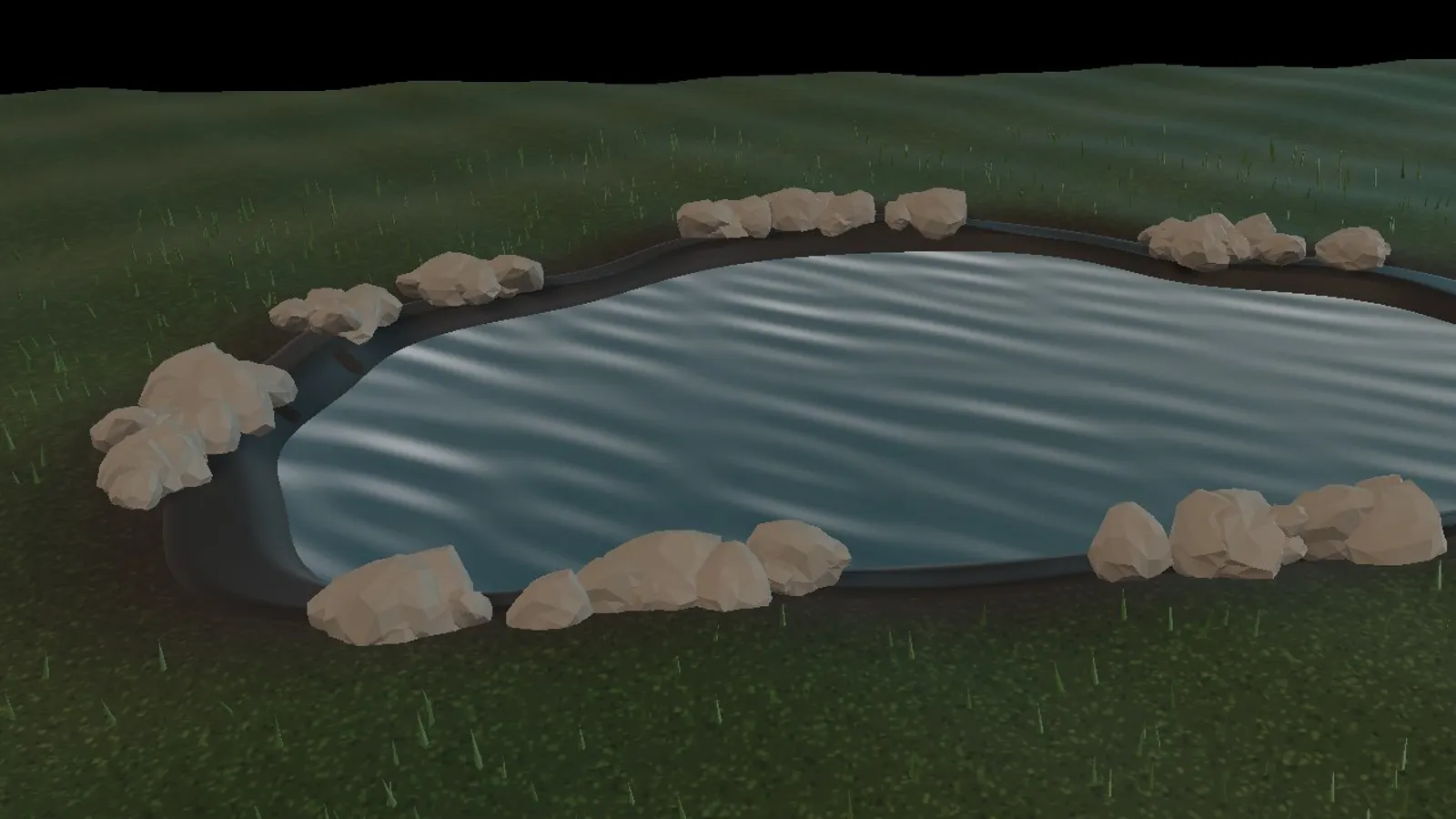
05 / 09 · Ponds & pools
The water stays put.
An EPDM membrane is laid into the excavated ground, fixed at the edges and waterproofs a pond or ornamental pool.
- LayingThe membrane roll is unrolled over the prepared ground.
- Edge fixingThe membrane is folded and fixed at the edges.
- FillingOnce the membrane is in place, the pool is filled.
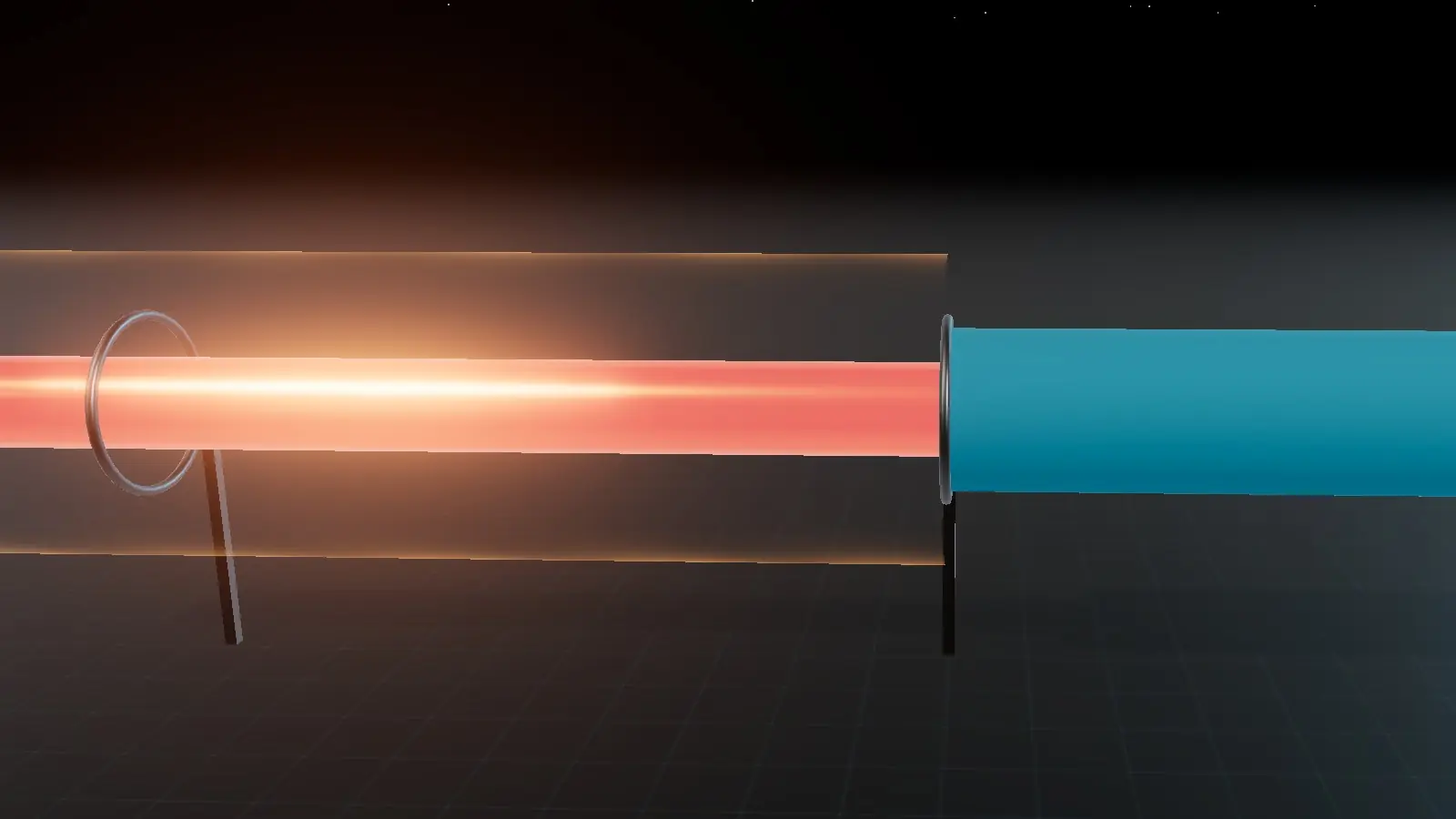
06 / 09 · HVAC & insulation
The heat stays in the pipe.
Rubber sponge insulation wraps the pipe and reduces heat loss to the surroundings. The heat map compares the bare and the insulated section.
- Bare pipeThe heat map shows the bare pipe surface as hot.
- WrappingThe sponge insulation wraps the pipe around its full circumference.
- Heat mapOn the insulated section the outer surface is close to ambient (illustrative colour scale).
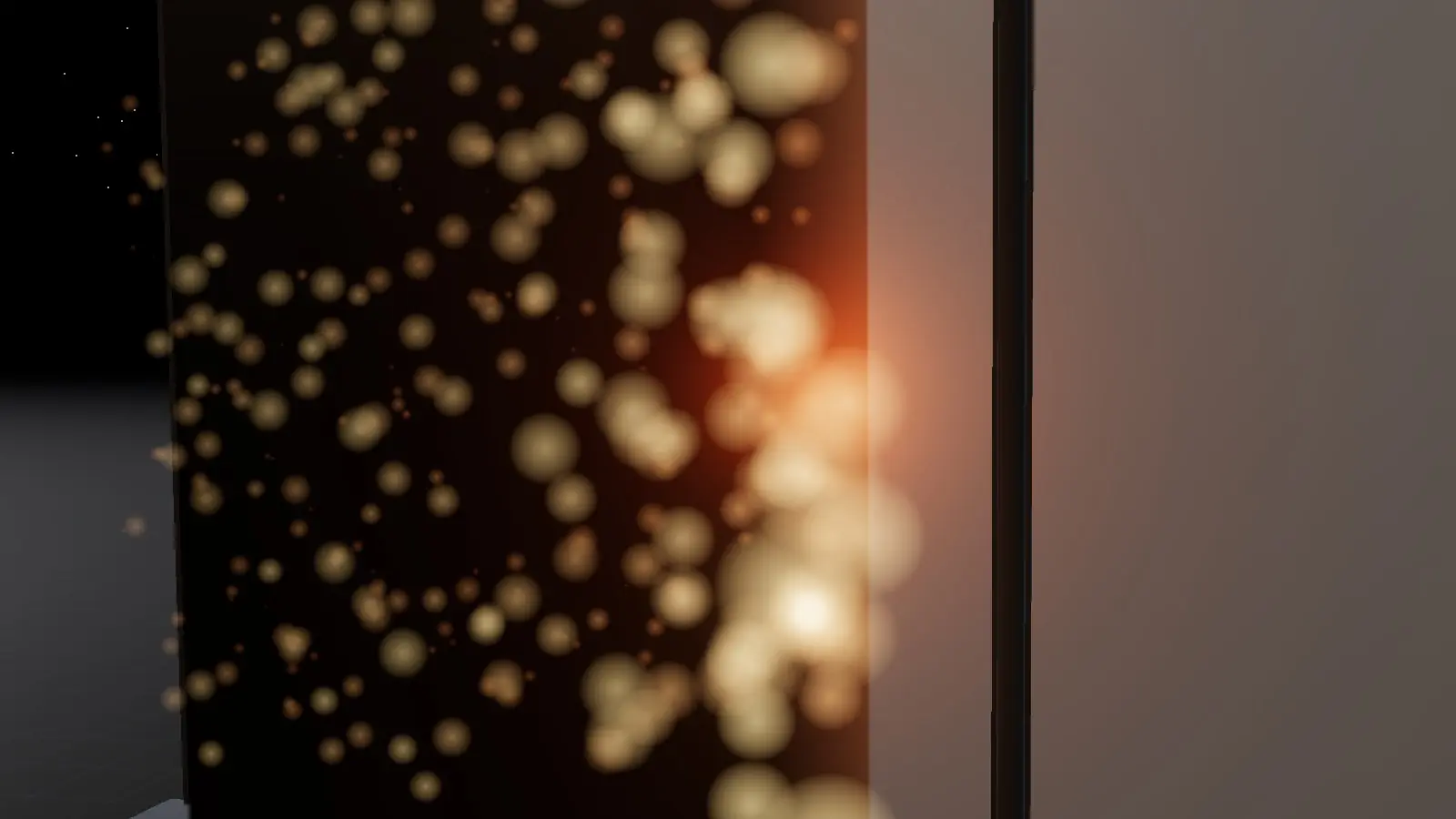
07 / 09 · Fire safety
The flame stops here.
Flame-retardant EPDM seals and membranes are used in high fire-risk applications to stop flame from spreading along the material.
- Panel jointA flame-retardant seal sits in the joint between two panels.
- FlameThe flame travels along the panel surface.
- StopThe flame stops at the flame-retardant seal line (illustration).
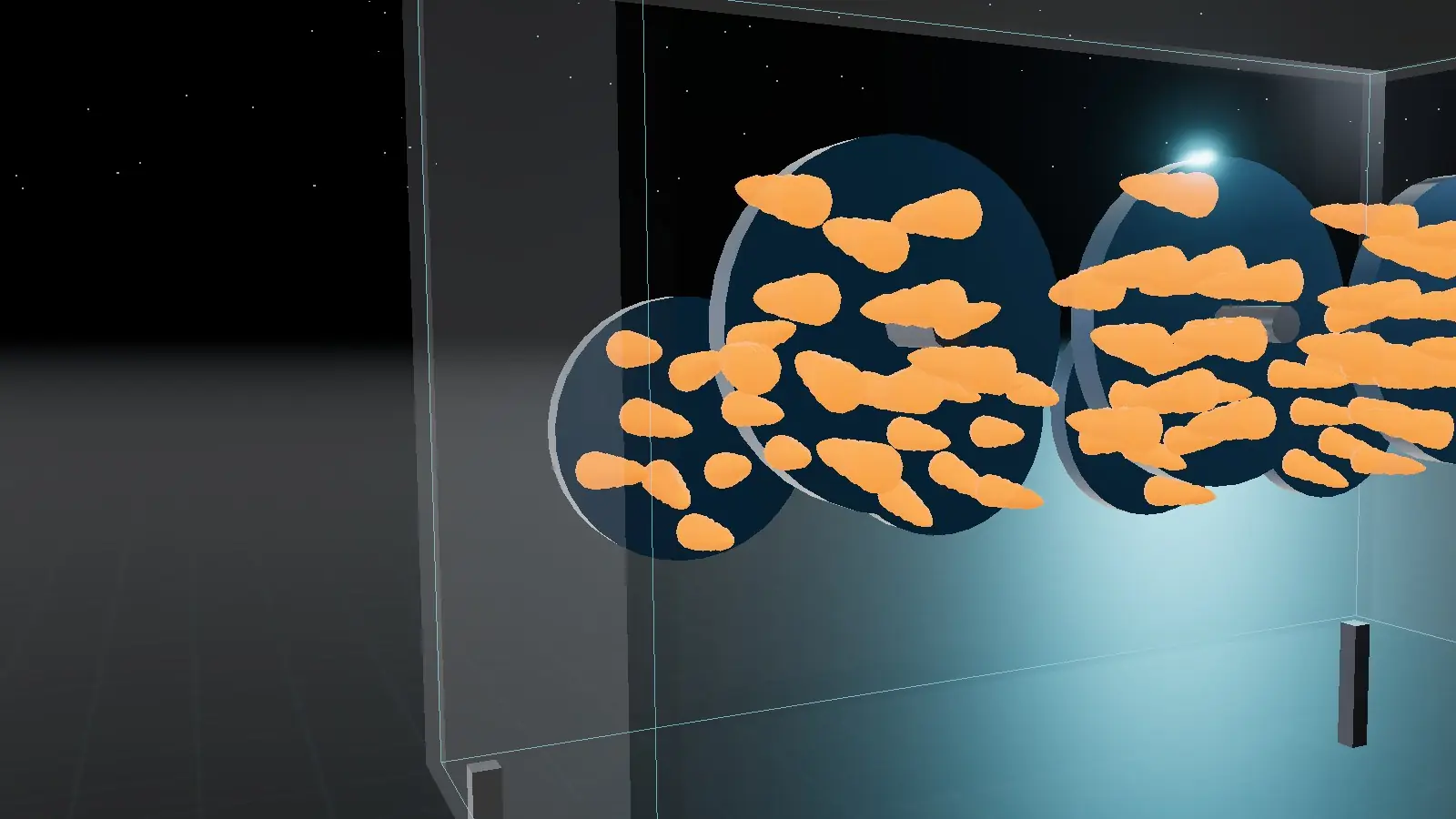
08 / 09 · Agriculture & poultry
Rotating discs, flexible fingers.
In poultry processing lines rubber plucking fingers are fitted to the rotating discs of plucking machines.
- Plucker discsOpposed discs rotate in operation.
- Rubber fingersFlexible rubber fingers are set into the discs.
- Finger close-upThe fingers flex as they rotate.
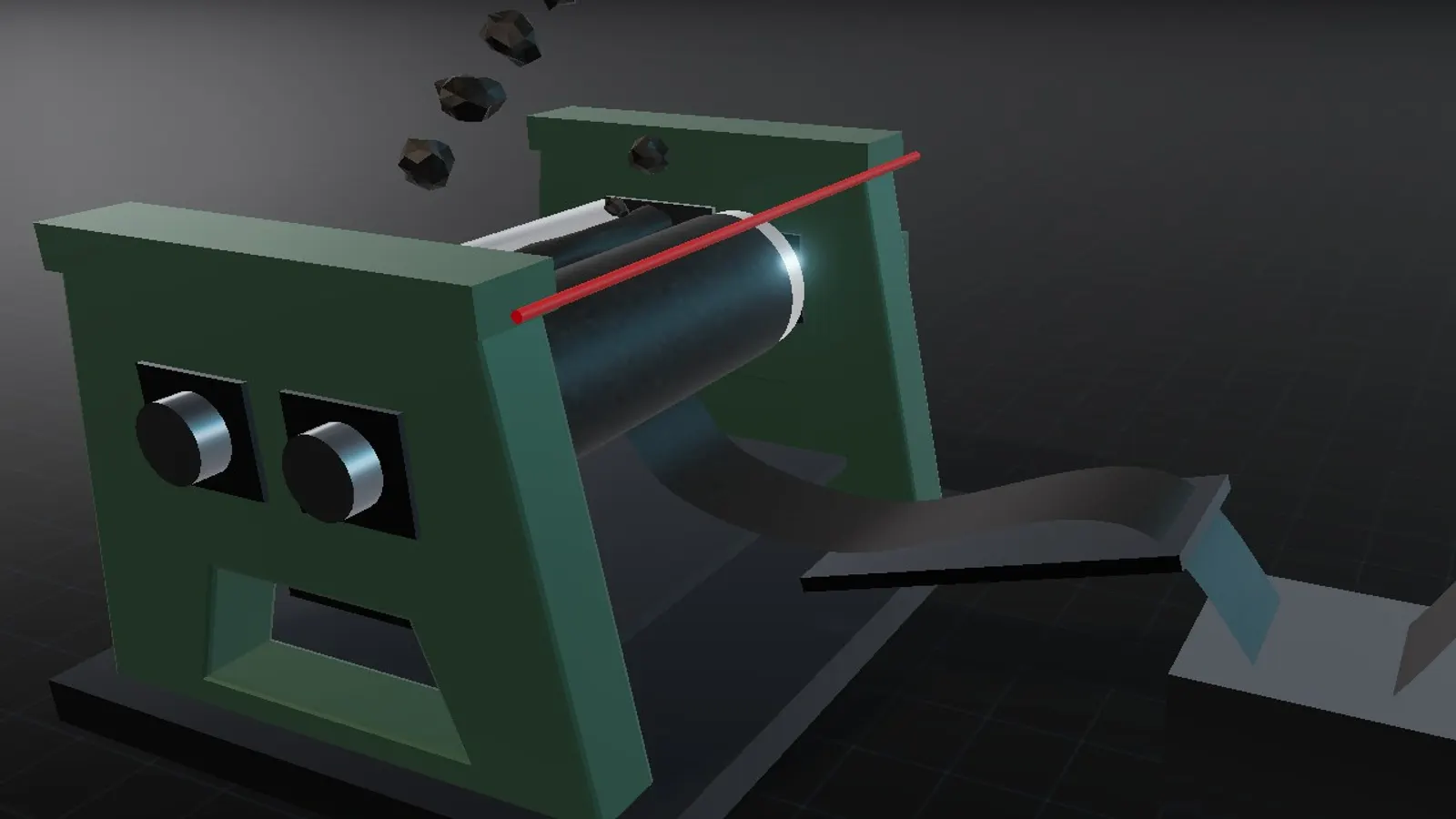
09 / 09 · Technical rubber compounds
From recipe to sheet.
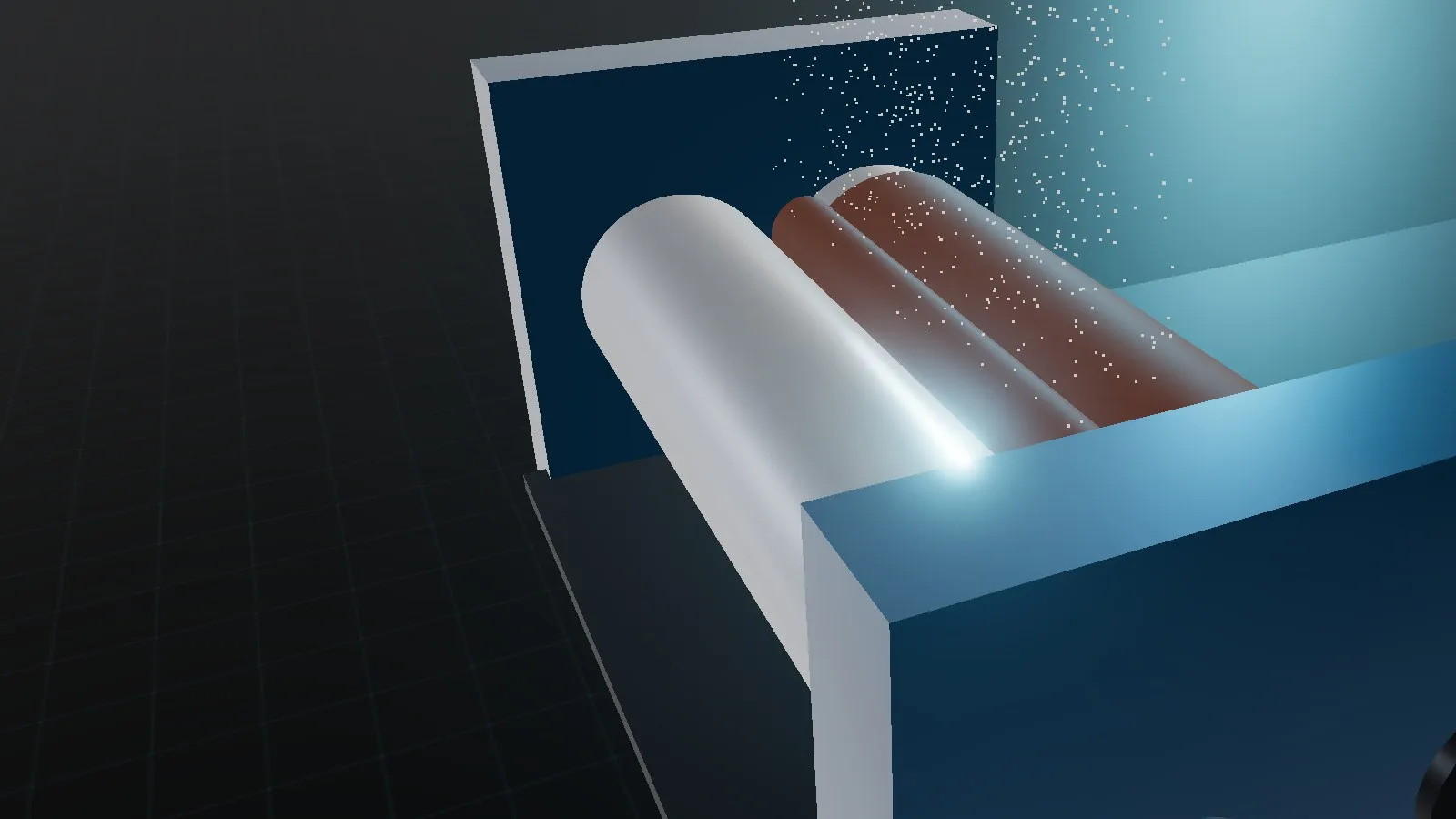
Rubber, fillers and chemicals are mixed on an open mill; the homogeneous compound is taken off as a sheet and shipped for the customer's own production.
- MillTwo rolls rotate in opposite directions.
- MixingThe compound passes between the rolls again and again.
- Batch-offThe strip taken off below passes through a cooling festoon and is stacked.
Why Derunlas
From lab to field — one accountable manufacturer.
After the film-like production and sector scenes, the corporate facts.
Every profile is designed in the lab, documented, and rewritten for your project.
From rail to defence and automotive — sealing, vibration and membrane in one language.
ISO certificates and test reports; a traceable path from quote to shipment.
Technical & quote
The 3D tour ends; clear next steps.
Cross-section, materials and quote form — corporate pace, no scene required.
Product orbit
Six product families, one laboratory.
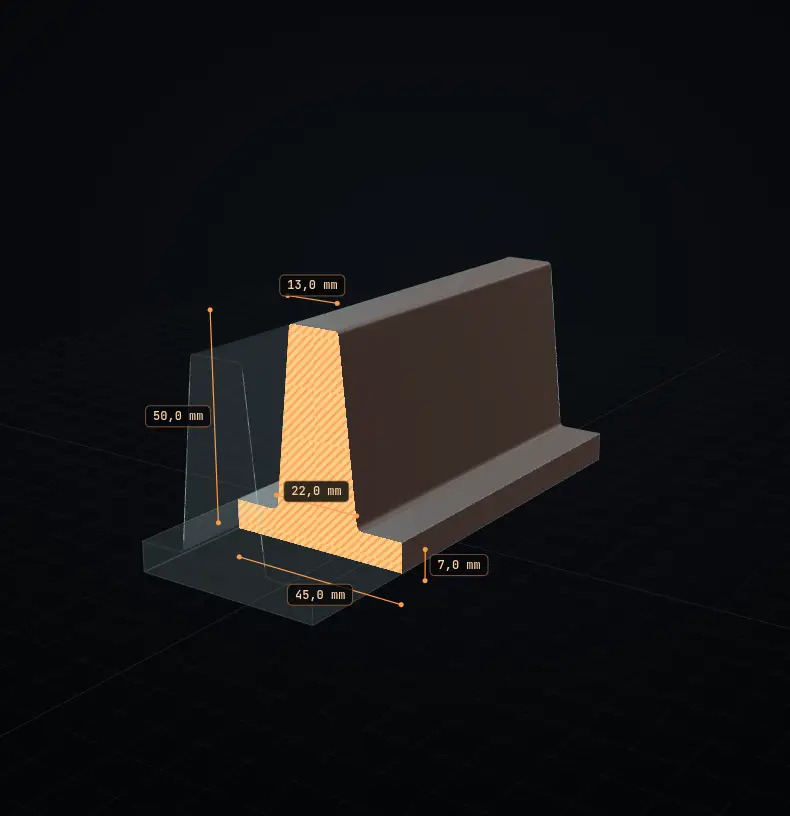
Cut the profile in your browser.
Rotate our profiles, cut them anywhere and compress them.
Explore the 3D section →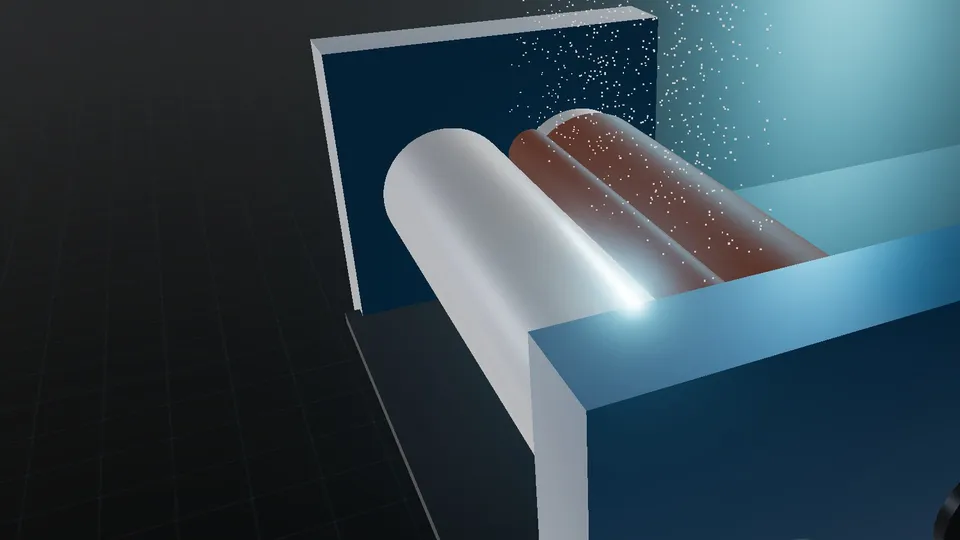
Technical Rubber Compounds
Black and coloured technical rubber compounds with recipes tailored to customer requirements.
Details →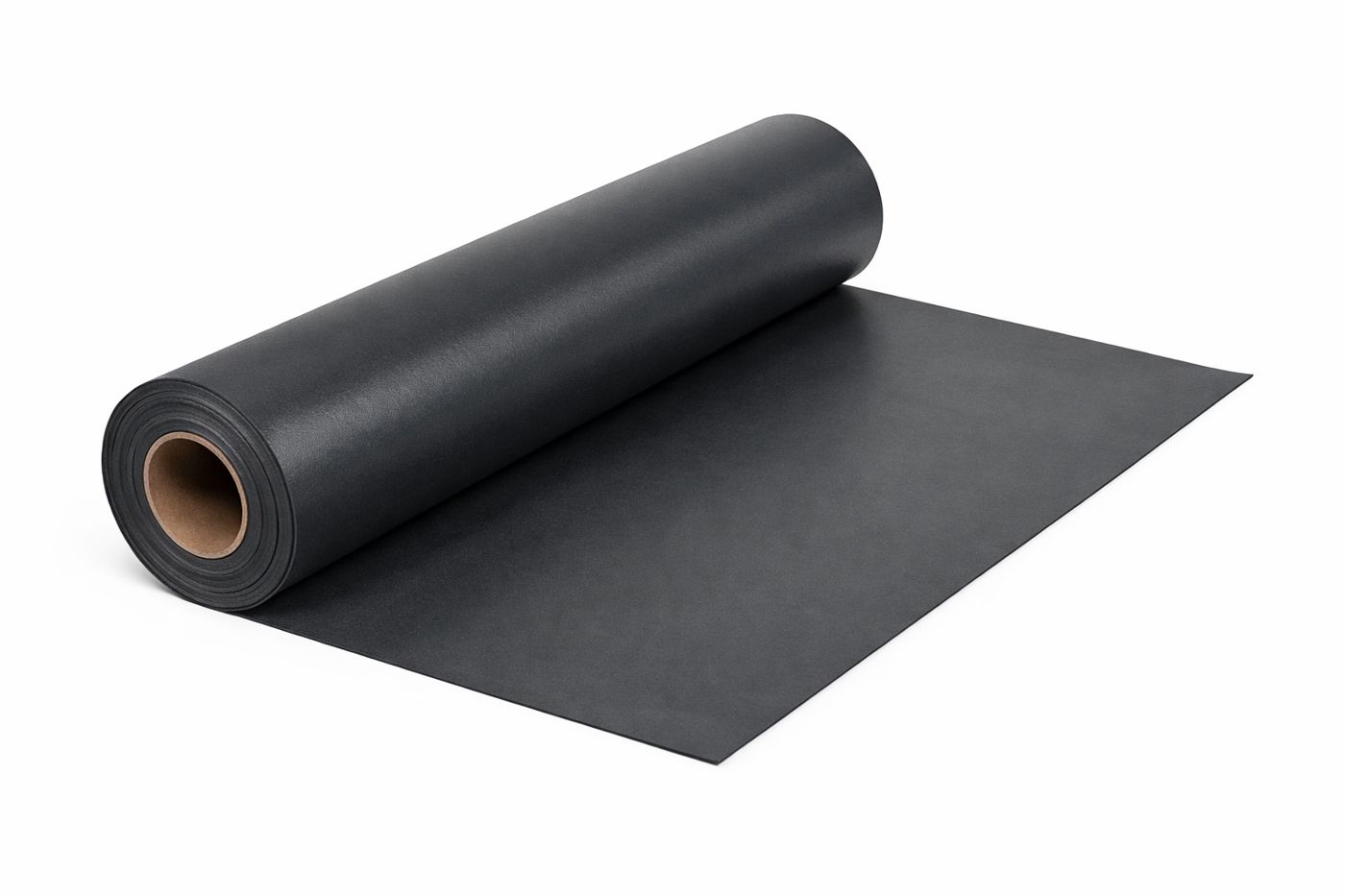
EPDM Membranes and Sheets
Flame-retardant or standard EPDM membranes and sheets in various thicknesses, produced by extrusion and calendering.
Details →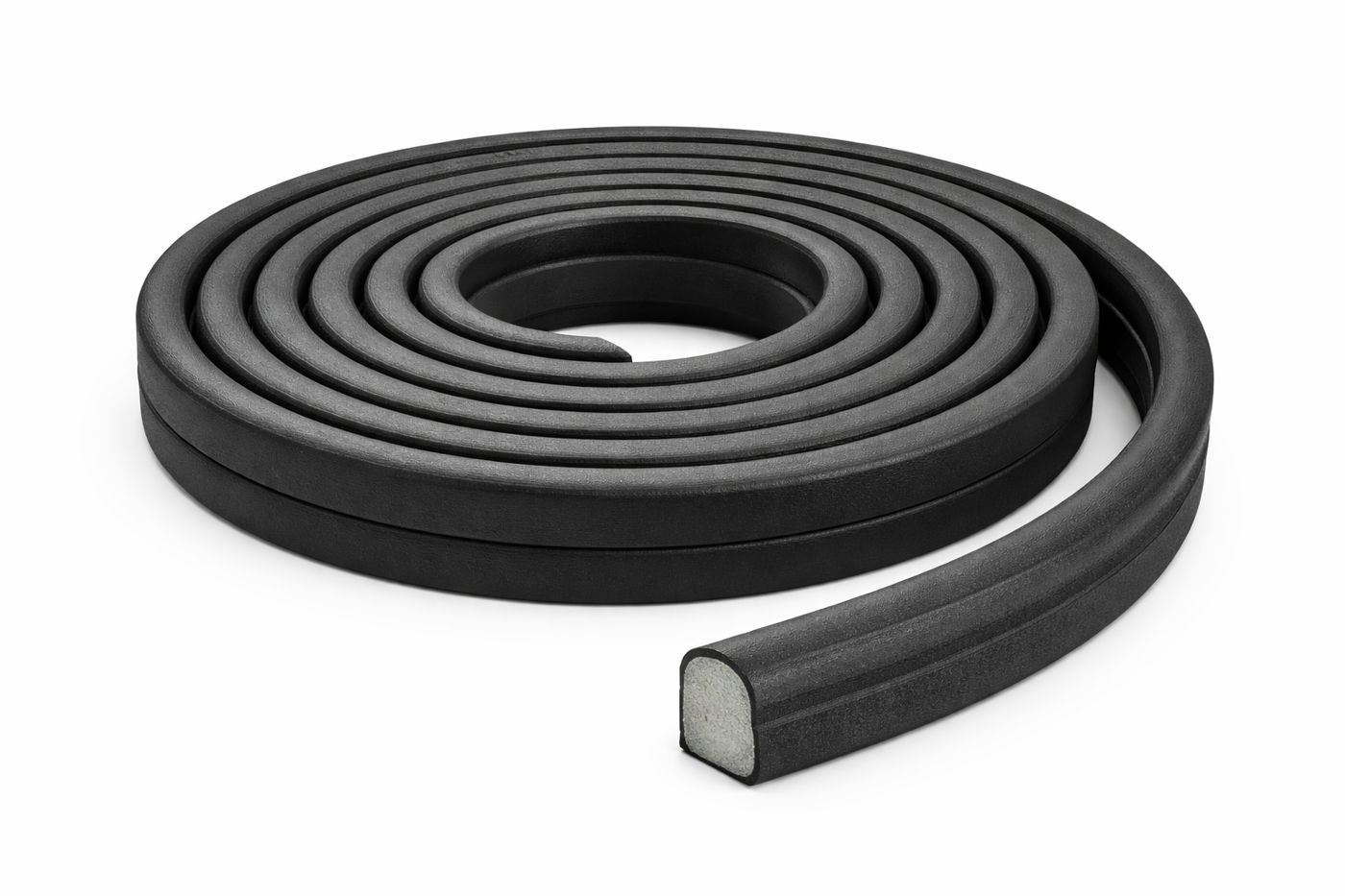
Rubber Seals, Profiles and Sponge Seals
Seals and profiles, extruded and vulcanised in a tunnel, for sound, water, heat, dust and smoke insulation.
Details →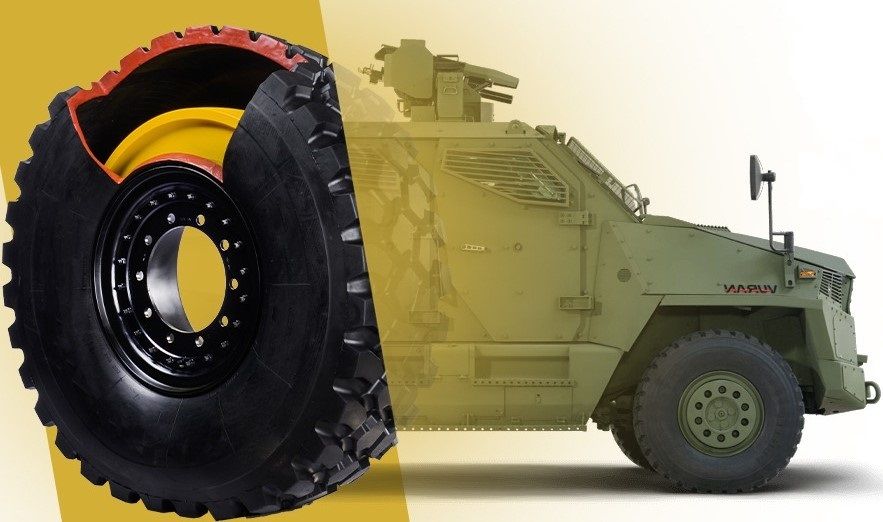
Rubber and Rubber-to-Metal Products
Vibration-damping rubber and rubber-to-metal parts; beadlock rings, armoured vehicle running gear parts, poultry plucking fingers.
Details →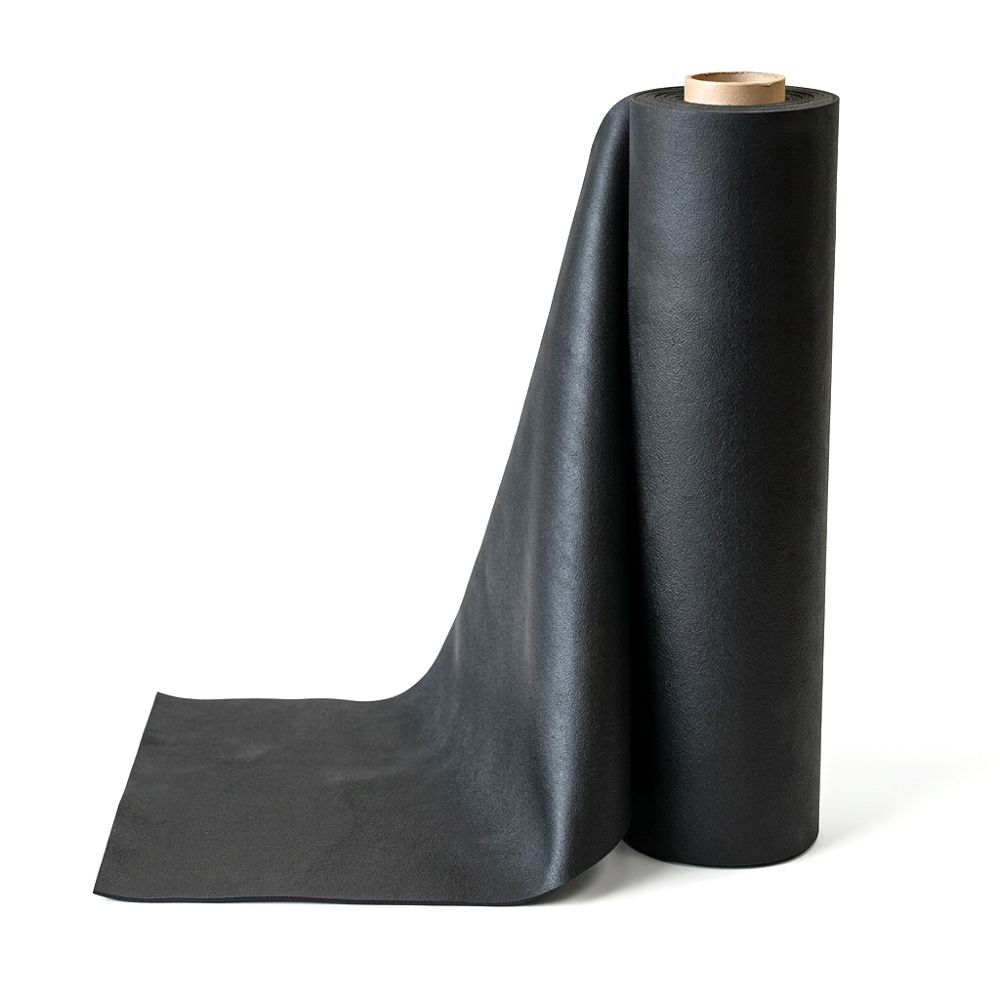
Flame-Retardant EPDM Membrane
EPDM insulation and protection membrane that limits flame spread, for applications with high fire risk.
Details →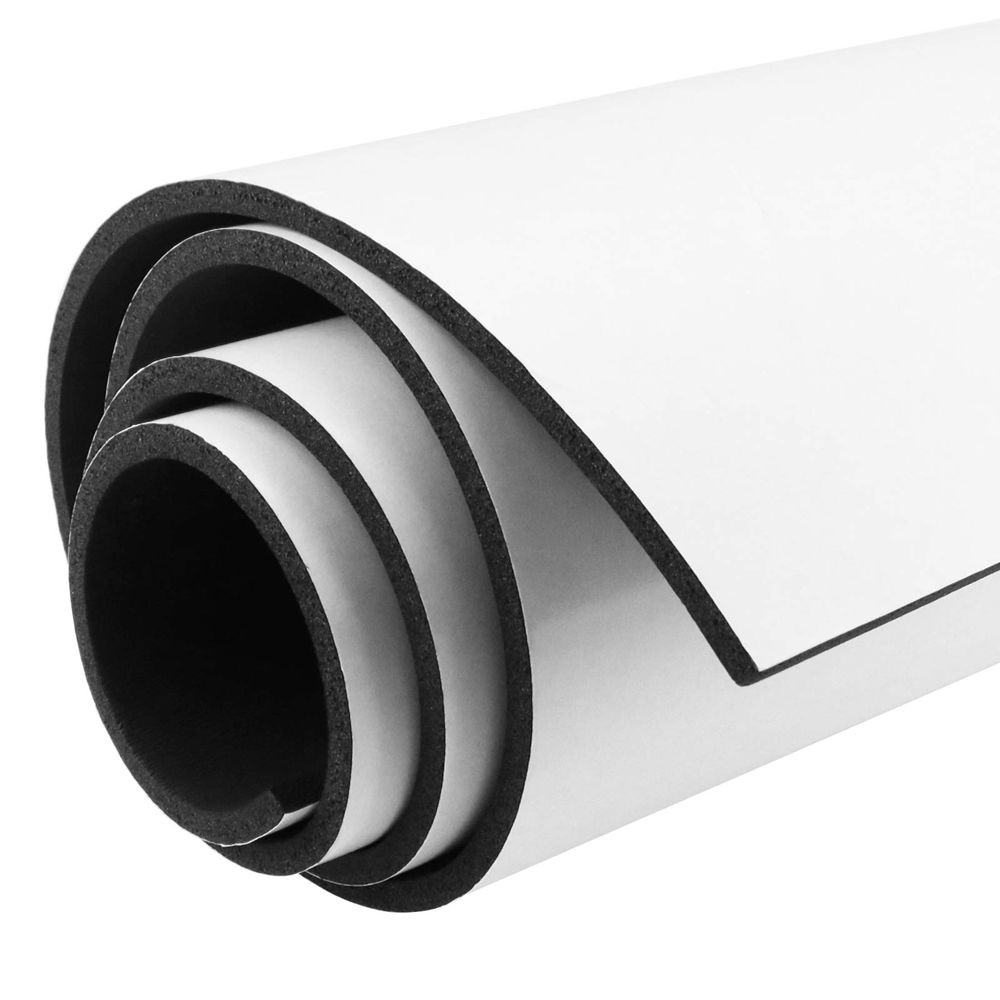
Flame-Retardant EPDM Seal
Technical EPDM seal that limits flame spread in a fire while providing sealing and safety.
Details →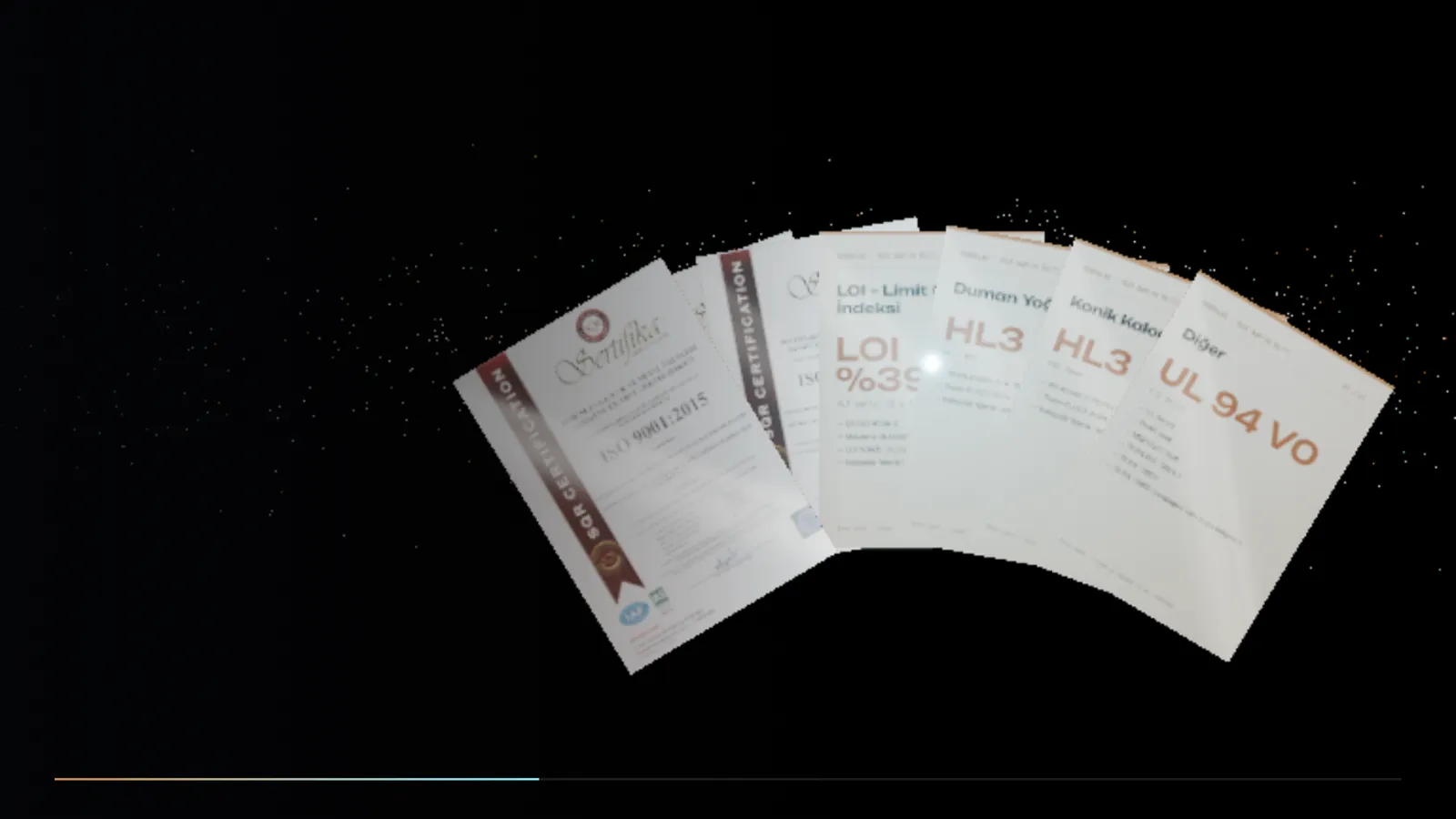
Evidence
Certificates, reports, laboratory.
ISO 9001 · 14001 · 45001 and EN 45545-2 HL3 test reports as floating 3D cards.
ISO 9001ISO 14001ISO 45001EN 45545-2 HL3
All documents →◉ Knowledge corner
Sourced, short, technical.
Make your project our next batch.
Request a quote →◉ Contact
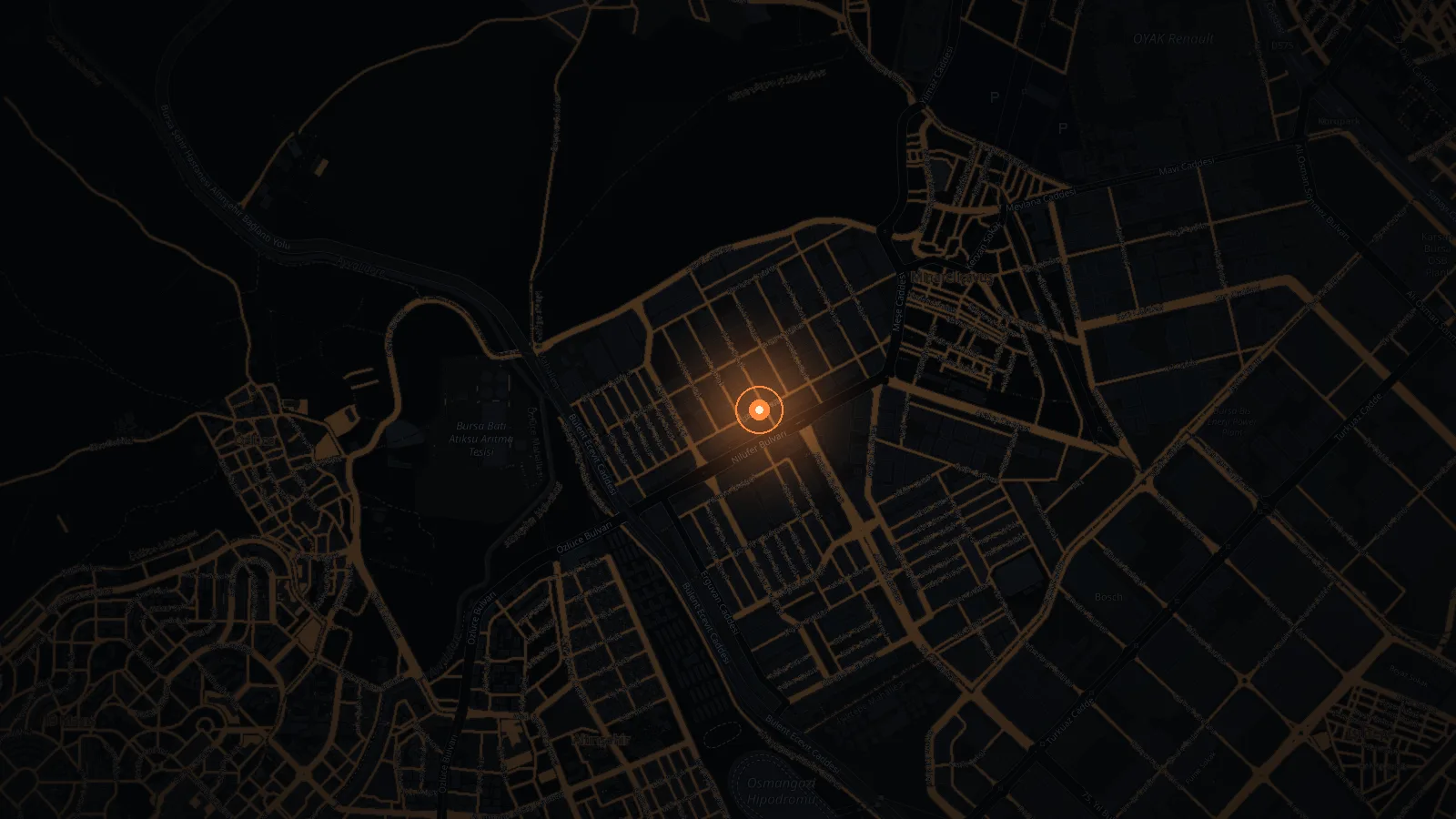
Nilüfer OIZ, Bursa.
- Address
- DERUNLAS Kauçuk ve Metal Ürünleri San. ve Tic. Ltd. Şti.
Nilüfer Org. San. Böl. (NOSAB) Şeftali Cd. No: 33
16140 Nilüfer / BURSA / TÜRKİYE - Phone
- +90 224 532 00 22
Fax +90 224 532 02 43 - info@derunlas.com
Export: sales@derunlas.com
 Open in Google Maps ↗ © OpenStreetMap contributors